E-Learning Resources
This section brings together a curated collection of past e-learning courses on interreligious and intercultural dialogue, with a particular focus on their connection to the Sustainable Development Goals. Although these courses are no longer active, their learning materials remain relevant and valuable.
Here you will find recorded lectures, readings, and learning resources that support reflection, education, and action toward more inclusive, peaceful, and sustainable societies. These materials are made available for self-paced learning and as reference resources for educators, students, and dialogue practitioners worldwide.
Looking for active learning opportunities? Explore our current e-learning courses and join a global community committed to intercultural understanding and sustainable development by clicking on the image below or here
If you have any questions or need clarification, feel free to contact us at: elearning@kaiciid.org

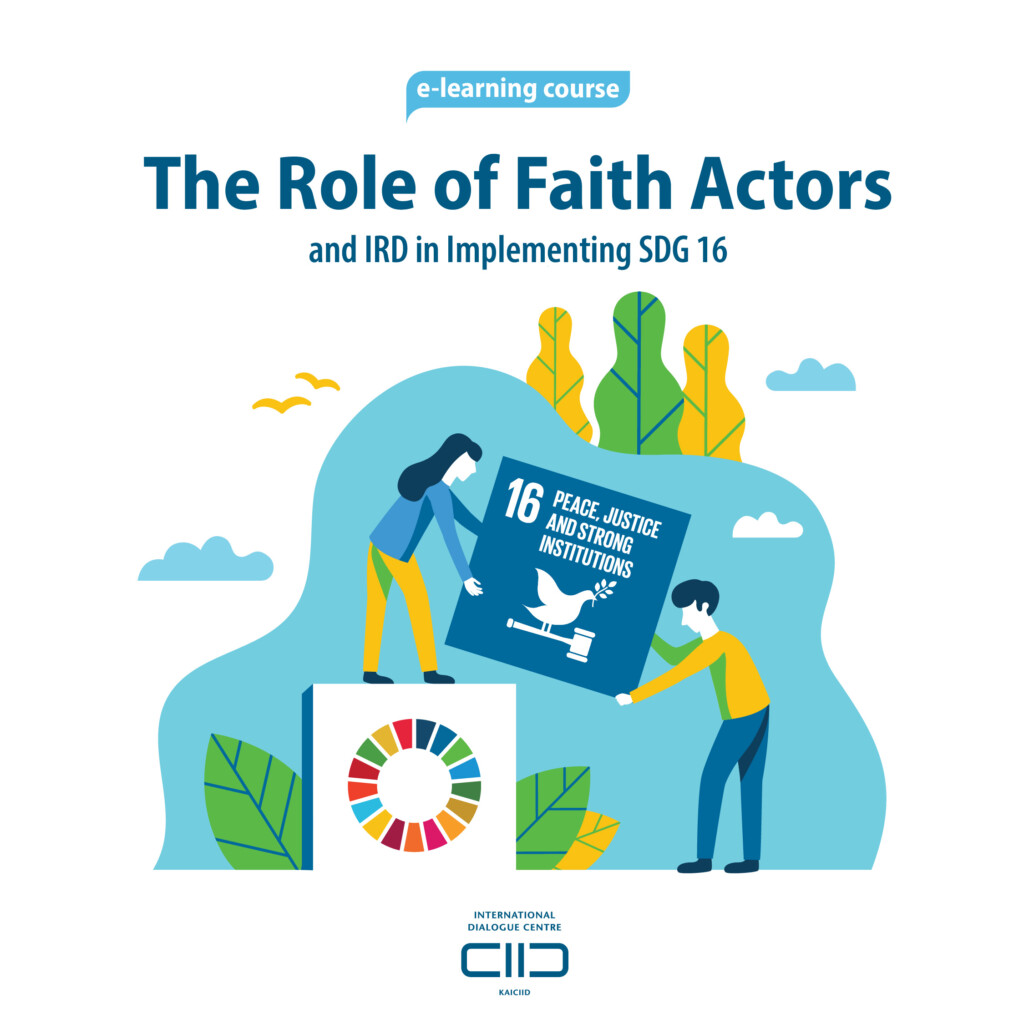
This learning resource is based on models, tools and methodology outlined in the “Goal 16 Advocacy Toolkit” developed by TAP Network. It focuses on understanding SDG 16 – Ensuring Peaceful, Inclusive and Just Societies – as well as its targets and indicators.
The resource provides practical tools and a step-by-step approach explaining how faith actors can be engaged, and how to best work with various government institutions to plan and implement SDG 16 at national and global levels. The course also provides recommendations on how faith actors can: engage with the SDG Policy Coordination Mechanisms; provide input to national SDG implementation plans; and work with government institutions to improve national SDG programmes.
Download the learning resource here
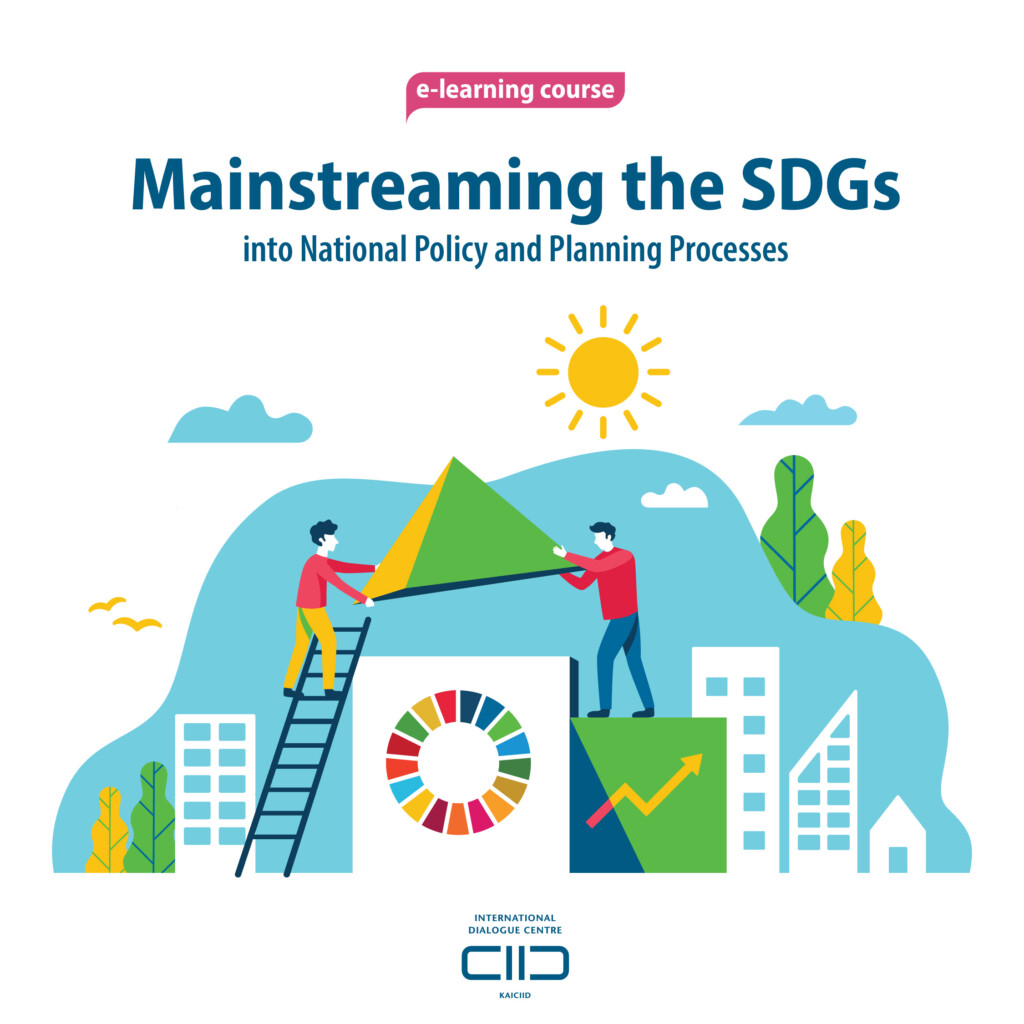
This learning resource looks at some of the challenges and opportunities relating to the implementation of the SDGs and their mainstreaming into national policy and planning processes. It also offers a model for mainstreaming a national planning process while exploring the possible ways in which faith-based actors and religious leaders can play a positive role.
Download the learning resource here
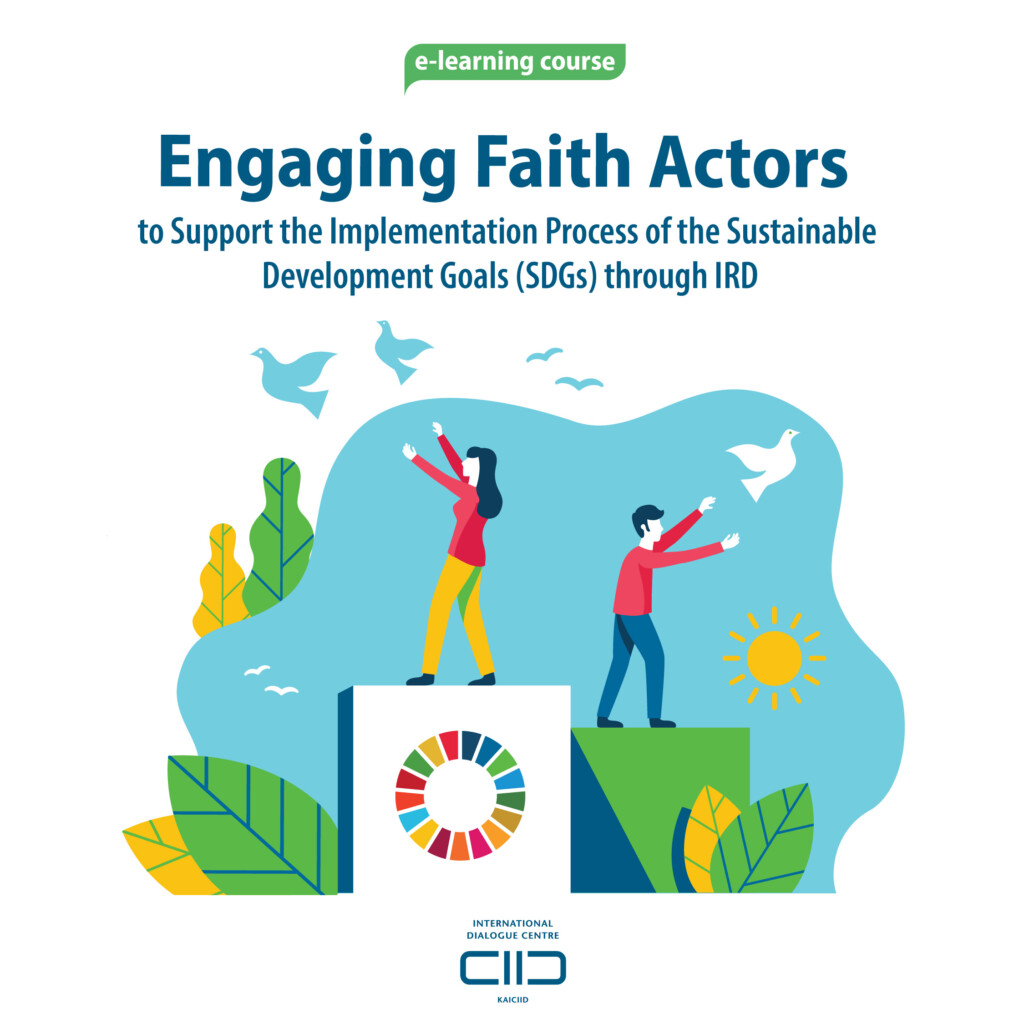
This learning resource provides an overview of the 2030 Agenda for Sustainable Development and the Sustainable Development Goals (SDGs). The key challenges and opportunities of implementing the SDGs will be highlighted and the role of different actors and stakeholders, including faith actors, in the implementation process of the SDGs will be examined.
Download the learning resource here
Faith leaders and faith-based organizations play a vital role in advancing the Sustainable Development Goals and responding to environmental and climate challenges. In recognition of this, the United Nations Environment Programme launched the Faith for Earth Initiative to mobilise faith-inspired environmental action, strengthen the capacity of faith actors, and foster collaboration with other stakeholders. This learning resource explores how the Initiative was embedded within UNEP’s broader strategy and highlights the power of collaboration between scientifically guided and faith-inspired approaches.
The resource examines the unique value faith actors bring to environmental action through practical examples and case studies. It also highlights the deep connections between faith traditions and care for nature, showing that environmental stewardship is a shared ethical principle across all major religions.
Download the material here
This learning resource was developed by KAICIID and University for Peace. It looks at the disturbing rise of xenophobia, racism and intolerance from the perspective of the United Nations. In this sense, violence committed ‘in the name of religion’ can lead to massive violations of human rights, including freedom of religion or belief. Mutual understanding and interreligious dialogue constitute important dimensions of the dialogue among civilizations and of the culture of peace in order to tackle the disturbing rise of hate speech.
The resource provides methodology and policy recommendations on how to identify and counter hate speech through the promotion of interreligious and intercultural dialogue, understanding and cooperation for peace with potential partners at all levels.
Download the learning resource here
Developed by KAICIID and the Lutheran World Federation, with contributions from the National Muslim Council of Liberia, this learning resource highlights the vital yet often unrecognised role of faith-based actors in advancing the United Nations Sustainable Development Goals.
The resource helps faith-based actors clearly link their existing work to the SDGs, using the Waking the Giant self-assessment tool to make their impact more visible and intentional.
Download the learning resource here
KAICIID’s Europe Region Programme supports people seeking refuge to improve their process of integration in their new host society. In this context, a toolkit was developed for newcomers in Europe to strengthen dialogue as a two-way process of mutual learning that takes place at all levels of society.
Based on this toolkit, this learning resource sees dialogue as a practical tool for integration that government authorities and NGOs, including faith-based actors, can use in their daily work as an addition to existing programmes and frameworks they have established. The main objective of this learning resource is to facilitate dialogue with people seeking refuge in Europe to better integrate them in host societies.
The learning resource “Integration through Dialogue: A toolkit to empower people seeking refuge in Europe” is comprised of four modules.
Module 1: The Importance of Dialogue
Module 2: The Toolkit
Module 3: The Dialogue Session
Module 4: The Dialogue Cycle
Download the learning resource here
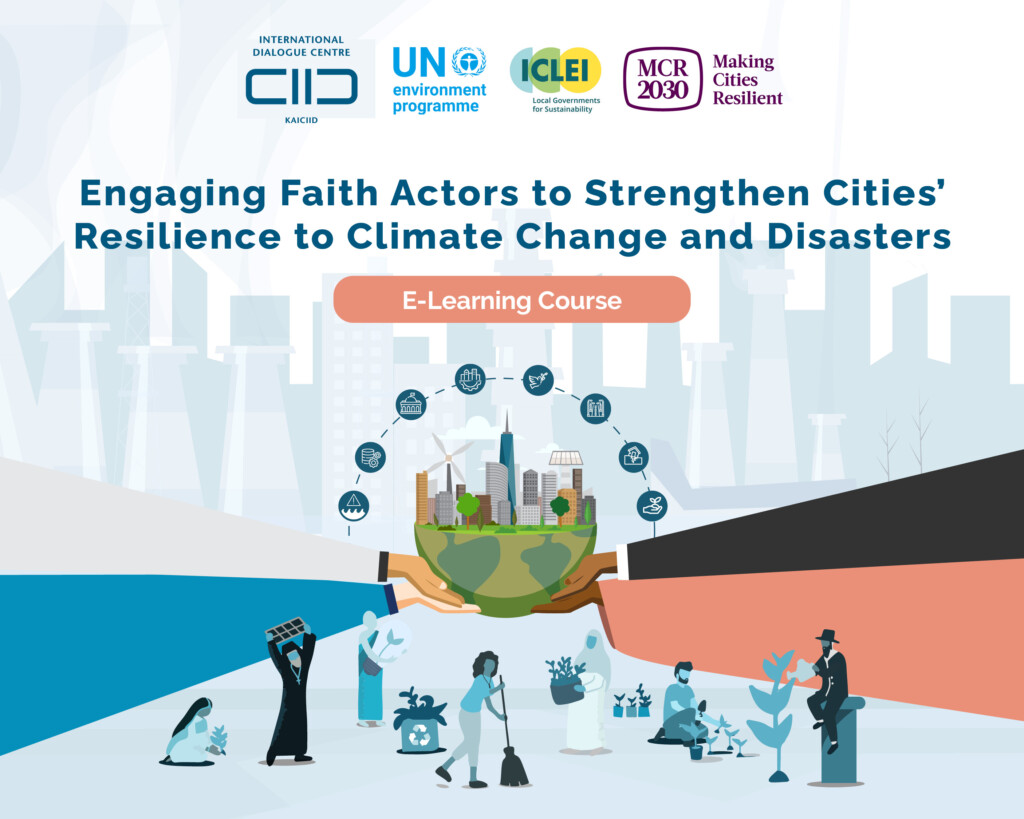
Disasters increasingly affect vulnerable urban communities, underscoring the urgent need for more resilient cities. Faith leaders and faith-based organizations are often first responders and trusted community actors, playing a critical role in disaster prevention, preparedness, response, and recovery. Strengthening collaboration between governments and faith actors is therefore essential for effective urban resilience and disaster risk reduction.
To address this need, KAICIID, in partnership with UNEP, ICLEI, and the MCR2030 Global Initiative, has developed a six-module learning resource. The modules cover: (1) faith-based approaches to city resilience and urban risk reduction; (2) interreligious and intercultural dialogue in support of the Sendai Framework, Paris Agreement, and SDGs; (3) scaling up community-level faith engagement in eco-DRR; (4) using the Disaster Resilient Scorecard to assess resilience gaps; (5) developing and monitoring resilient city action plans; and (6) frameworks for scaling faith-based approaches to strengthen city resilience..
Download the learning resources here
Teacher, Kenya
Engaging Faith Actors to Support the Implementation Process of the SDGs
· ‘Being in an environment where we engage with students and parents from different religious backgrounds, the training has better equipped me in having knowledge on ways to better engage our students and parents to meaningfully participate in interreligious programs to enhance greater impact in achievement of the SDGs.’
Teacher, Angola
Engaging Faith Actors to Support the Implementation Process of the SDGs
The material on Faith Actors and the Sustainable Development Goals (SDGs), training was an eye-opener for me on issues of global challenges we face, including poverty, inequality, climate change, environmental degradation, peace, and justice. It also made me aware of how FBOs and other organizations can participate in the implementation of the goals in their own ways.
The course has therefore influenced my perspective on my work in the sense that I will encourage and support my students to participate in sustainable development activities, as this may motivate them to become agents of change in the future.
I plan to apply what I have learned in my teaching or faith community by speaking out about sustainable issues that focus on environmental conservation, equality, and social justice, among others, and the role we can play to contribute towards a better and more sustainable future.
The potential impact this could have on the people I serve is that they will be more aware of the need for sustainable development actions and possibly become agents of positive change in the community.