Dialogue for Crisis Response and Resilience
Dialogue for Crisis Response and Resilience
In times of crisis, societies are tested in their ability to remain connected, inclusive, and resilient. KAICIID’s webinars on crisis response and resilience bring together faith actors, dialogue practitioners, and community leaders to explore how interfaith dialogue can support communities facing uncertainty, disruption, and conflict. From global health emergencies to social tensions and conflict-affected contexts, these sessions highlight how dialogue can sustain trust, foster solidarity, and enable collective responses.
What You’ll Discover:
- Faith-inspired responses that protect vulnerable people and strengthen solidarity in times of crisis
- Mental-health, pastoral-care and community coping approaches that foster wellbeing and connection
- Dialogue-based strategies for countering misinformation, preventing violent extremism and sustaining social trust
- The role of local faith actors and equitable partnerships in humanitarian response, peacebuilding and long-term resilience
Immediate Crisis Response & Solidarity
How dialogue mobilizes communities to respond quickly and collectively in times of crisis
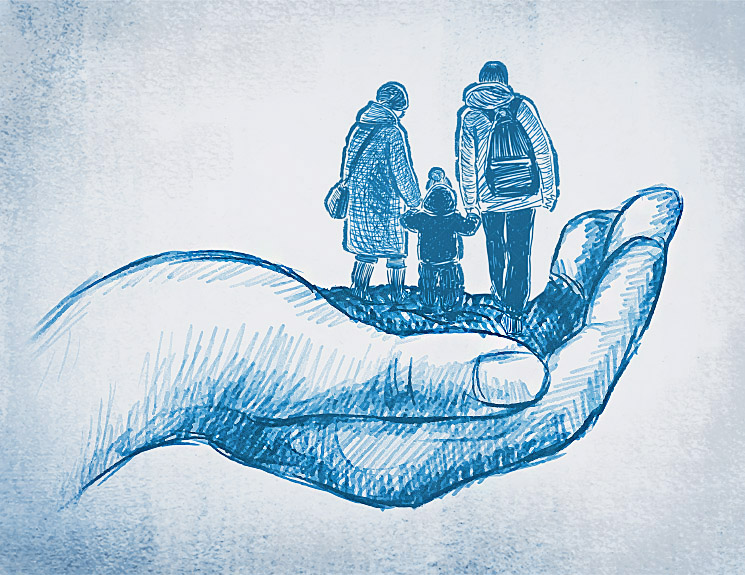
Protecting The Vulnerable: A Multireligious Call For Solidarity And Action, June 2020
This webinar examines the protection of vulnerable people during the COVID-19 pandemic through the perspectives and responsibilities of religious leaders. Featuring members of KAICIID’s multireligious Board of Directors, the discussion considers the health, social, pastoral, economic and political effects of the crisis, including isolation, bereavement, loss of livelihoods, domestic violence and the added risks faced by communities affected by conflict.
Speakers reflect on how faith leaders can identify emerging needs, support people and communities facing hardship, and engage policymakers and the public in responding to the pandemic with solidarity, care and practical action.
COVID-19 and Religion, March 2020
At the outset of the COVID-19 pandemic, this webinar explored the role of religious communities and faith-based organisations in responding to a rapidly unfolding global crisis. Bringing together representatives from different faith traditions, it examined how communities adapted worship and pastoral support during social distancing, maintained connection through online spaces, and worked alongside public, community and emergency-service leaders. Speakers shared practical responses, reflections on preparedness, and messages of solidarity and hope amid uncertainty.
Community Coping & Wellbeing
Supporting resilience through mental health, trust-building, and shared experiences in challenging times

Faith in the Times of Pandemic: Coping Mechanisms for Vulnerable Populations in Asia, October 2021
Focusing on experiences from Indonesia, Malaysia and Thailand, this webinar considers how crises can place severe strain on individual and community wellbeing. It addresses the effects of isolation, economic uncertainty, disrupted routines and reduced access to trusted support networks, with particular attention to people facing heightened vulnerability, including those living with pre-existing mental-health conditions, disabilities or social marginalisation.
In partnership with the University of Malaya, the discussion brings together perspectives on mental-health support, faith-sensitive care and religious or spiritual coping practices. Speakers explore how community leaders, service providers and faith actors can help people navigate fear, grief, stress and uncertainty, in the context of the COVID-19 pandemic.

Faith on the Frontlines: Supporting Mental Health during COVID-19, February 2021
This webinar explores the role of spirituality, pastoral care and interfaith action in supporting mental health and community wellbeing during times of crisis. It considers how uncertainty, isolation, disrupted routines and loss of livelihoods can intensify anxiety, stress and existing mental-health conditions, particularly for vulnerable groups with limited access to support services.
Drawing on experiences from faith actors working on the frontlines, the discussion highlights grief counselling, care for health workers, trauma healing and interfaith initiatives that help communities remain connected and supported, viewed through the lens of the COVID-19 pandemic.
Systems, Prevention & Longterm Resilience
Strengthening structures and partnerships that sustain resilience and prevent future crises

Prevention and Response: The Contribution of Religious Leaders to Counteracting Violent Extremism and Promoting Social Solidarity in Europe, December 2020
This webinar brings together European religious leaders and representatives of secular organisations to examine how communities can respond to violence linked to religious concerns and prevent further polarisation. It considers the responsibilities of faith leaders in the immediate aftermath of an attack, including reassuring affected communities, maintaining communication across strained relationships and working with public institutions to uphold trust and social solidarity.
The moderated discussion also explores longer-term approaches to preventing violent extremism. Drawing on previous experience and examples from across Europe, speakers reflect on how partnerships between faith leaders, policymakers and civil-society actors can counter alienation, reduce the risk of radicalisation and strengthen social cohesion.

A Covid 19 Special: Combatting fake news on social media in times of crisis, May 2020
This webinar explores how misinformation, disinformation and fabricated content can deepen polarisation, reinforce discrimination and fuel religious, ethnic, political and sectarian divisions. With particular attention to the Arab region, it considers the risks that manipulated information and hate speech can pose to social cohesion, trust and peace.
The discussion highlights practical approaches to fact-checking and responsible reporting, including tools and techniques that support more balanced, transparent and accurate communication. It also examines the role of young people in identifying, challenging and countering false information across social media platforms. The webinar is in Arabic.
Listening to the Stories of Local Faith Actors on COVID-19 Response, April 2022
This webinar brings forward on-the-ground stories and case studies from local faith actors responding to the wider social and economic pressures experienced by communities in crisis. Contributors from Sri Lanka, the Philippines, the Arab World and other contexts share practical reflections on safeguarding women’s rights, supporting mental health, protecting livelihoods, countering misinformation and sustaining peacebuilding efforts.
Co-hosted through JLI’s Fair & Equitable Dialogues Series, the session examines both the opportunities and constraints faced by faith-inspired actors as they work alongside local communities. It forms part of the Looking Back to Look Forward: COVID-19 and Faith Reflections on 2020–2021 webinar series.
Accountable Localisation: Local Faith Actors Speak Out, February 2022
This webinar examines how localisation can strengthen humanitarian, development and peacebuilding work by placing local knowledge, leadership and priorities at the centre of action. It explores the practical realities of implementing localisation through grassroots engagement, community consultation, participatory approaches and adaptation to local contexts and sensitivities.
Part of JLI’s Fair & Equitable Dialogues series, the discussion brings together local faith actors and international partners to reflect on lived experience from localisation projects in the Global South. Through case studies and dialogue, speakers consider how unequal power dynamics can be addressed, why local faith actors are often essential first responders, and what practical steps can make partnerships more accountable, relevant and equitable.